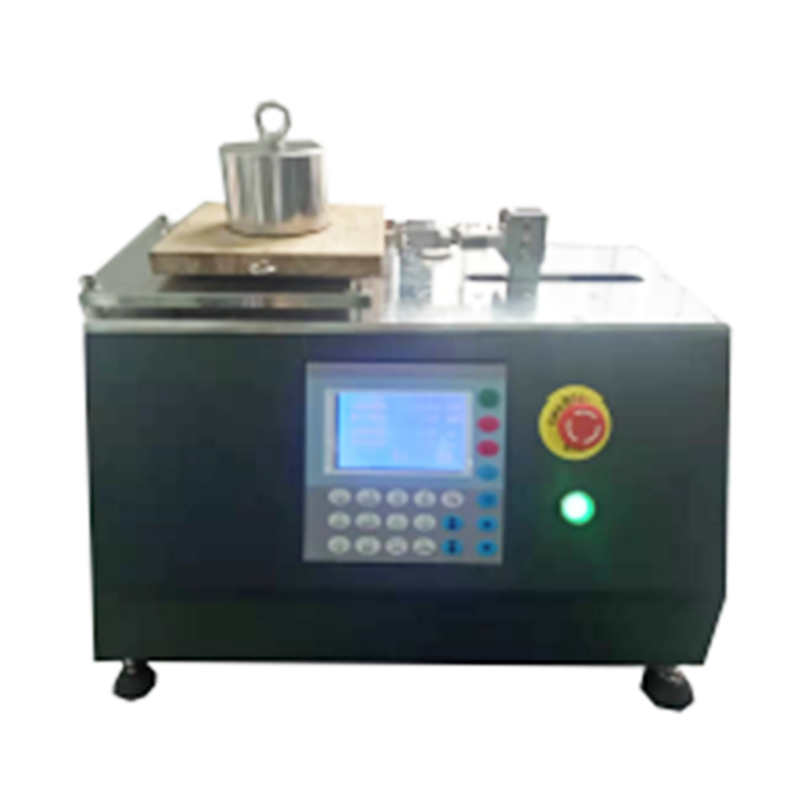
In modern materials laboratories, the computer servo tensile testing machine has become the gold standard for measuring tensile strength, elongation, yield behavior, and elastic modulus with sub-1% accuracy. Whether you are validating automotive steel, qualifying medical-grade polymers, or certifying packaging films, the precision of your servo control tensile tester directly determines the credibility of your test data. This 2026 guide walks engineers, QC managers, and procurement teams through everything from working principles to procurement checkpoints — so you can specify the right machine the first time.
What Is a Computer Servo Tensile Testing Machine?
A computer servo tensile testing machine is a precision instrument that applies controlled tensile, compression, bending, peel, or shear forces to a specimen while a computer captures real-time load and displacement data. Unlike older mechanical or fully hydraulic systems, an AC servo universal testing machine uses a closed-loop AC servo motor, a high-precision ball screw, and PC-based software to deliver repeatable, traceable results.
Core Components & How It Differs from Hydraulic UTMs
A modern electronic tensile testing machine integrates five core modules: the load frame, the AC servo motor and driver, a precision ball screw transmission, a high-accuracy load cell, and computer control software. Compared with hydraulic universal testing machines, a servo-driven system offers cleaner operation, lower noise, faster response, and significantly better accuracy at low loads.
Feature | Computer Servo Machine | Hydraulic UTM |
| Drive Type | AC servo motor + ball screw | Hydraulic cylinder |
| Force Range | 5 N – 300 kN | 100 kN – 2,000 kN |
| Accuracy | ±0.5% of reading | ±1% of reading |
| Best For | Plastics, rubber, wires, films, metals | Concrete, rebar, high-force metals |
| Maintenance | Low (no oil) | Higher (oil & seals) |
Working Principle — How Servo Control Delivers Precision
The brilliance of a computer servo tensile testing machine lies in its closed-loop architecture. The computer issues a command (speed, load, or strain target) to the servo driver, which energizes the AC servo motor. The motor rotates a precision ball screw, moving the crosshead vertically. As the specimen stretches, the load cell continuously feeds force data back to the controller, which corrects motor output in milliseconds. This three-stage feedback delivers exceptional stability across the entire 0.001–500 mm/min speed range.
Three Closed-Loop Control Modes
A high-end servo motor tensile tester supports load control (constant force rate, ideal for metals per ISO 6892), displacement control (constant crosshead speed, used for plastics per ASTM D638), and strain control (constant deformation rate, required for advanced research). The ability to switch between these modes mid-test — without losing data — separates premium machines from budget units.
Key Technical Specifications You Must Verify
Before signing a purchase order, every buyer should validate the following ten parameters of any prospective computer servo tensile testing machine. These figures determine whether the equipment will satisfy your standards auditors and pass calibration cycles for years to come.
| Parameter | Recommended Specification |
| Load Capacity | 5 N – 300 kN (customizable) |
| Load Accuracy | ±0.5% of reading (ISO 7500-1 Class 0.5) |
Test Speed Range | 0.001 – 500 mm/min |
| Displacement Resolution | 0.001 mm |
| Data Sampling Rate | ≥ 1,000 Hz |
| Motor | Panasonic / Yaskawa AC Servo |
| Ball Screw | Taiwan TBI / German precision class |
| Crosshead Travel | 600 – 1,400 mm |
| Software Windows | 10/11 compatible, multilingual |
| Standards | ASTM E8, ISO 6892, ISO 527, GB/T 228.1 |
A reliable servo control tensile tester should also offer USB and RS232 data export, automatic Excel report generation, and user-definable test methods so labs can match in-house protocols.
Top Industrial Applications
The versatility of a computer servo tensile testing machine is what justifies its investment. With interchangeable grips, fixtures, and load cells, a single frame can serve multiple departments. Common application sectors include:
Metals & alloys — sheet, wire, and rebar tensile testing per ASTM E8.
Plastics & polymers — dog-bone specimens per ASTM D638 and ISO 527.
Rubber & elastomers — vulcanized rubber tested per ASTM D412.
Textiles, yarns, and fabrics — breaking strength and elongation studies.
Wires & cables — conductor tensile and insulation peel.
Adhesives & tapes — 90° / 180° peel and lap-shear evaluations.
Packaging films & laminates — seal strength and burst behavior.
Composites & carbon fiber — flexural and tensile modulus.
This breadth makes an electronic tensile testing machine a strategic asset for any multi-discipline QC laboratory.
International Standards Compliance (ASTM, ISO, GB)
A trustworthy computer servo tensile testing machine must comply with globally recognized standards. Look for documentation that explicitly references ASTM E8/E8M for metals, ASTM D638 for plastics, ASTM D412 for rubber, and ASTM D903 for adhesives. On the ISO side, the machine should satisfy ISO 6892-1 (metals), ISO 527 (plastics), ISO 37 (rubber), and the all-important ISO 7500-1 calibration standard for force-verification accuracy. Chinese manufacturers exporting globally should also align with GB/T 228.1 and GB/T 1040 to support domestic and international clients simultaneously.
Computer Servo vs. Hydraulic vs. Manual Tensile Testers
Choosing between a computer servo tensile testing machine and alternative drive systems comes down to force range, accuracy, and cost of ownership. For loads up to 300 kN with accuracy requirements of ±0.5% or tighter, a servo-driven system is virtually always the right answer. Hydraulic machines dominate above 600 kN, where massive force capacity outweighs the need for sub-percent accuracy. Manual units remain only in education or very low-budget applications where data fidelity is not critical. For most industrial labs in 2026, the AC servo universal testing machine offers the best balance of precision, footprint, and lifecycle cost.
How to Choose the Right Computer Servo Tensile Testing Machine
Follow this seven-point checklist when comparing suppliers:
1. Define maximum load — pick a capacity 1.5× your highest expected force.
2. Identify test standards — match grips and software templates to ASTM/ISO codes used by your customers.
3. Verify grip compatibility — wedge, pneumatic, screw-action, or peel fixtures.
4. Audit the software — multilingual UI, batch testing, Excel/PDF export.
5. Confirm certifications — CE, ISO 9001, and ISO 7500-1 calibration certificates.
6. Evaluate after-sales — spare parts inventory, remote diagnostics, training.
7. Compare total cost — include calibration, consumables, and downtime estimates.
A diligent procurement process ensures your computer servo tensile testing machine delivers ROI for the full 10–15 year service life of the frame.
Why Choose Lituo Testing Machine as Your Manufacturer
Dongguan Lituo Testing Equipment Co., Ltd. has spent two decades engineering precision testing equipment for global laboratories. Every Lituo computer servo tensile testing machine is built with Panasonic AC servo systems, Taiwan-grade ball screws, and load cells calibrated to ISO 7500-1 Class 0.5. Each unit ships with CE certification, multilingual software, and one-on-one engineer support. From custom fixtures to on-site commissioning, Lituo combines OEM-grade manufacturing with responsive after-sales — an increasingly rare combination in the testing-instrument industry.
Frequently Asked Questions
Q1. What is the typical price of a computer servo tensile testing machine? Entry-level 5 kN benchtop units start around USD 2,800, while floor-standing 100–300 kN models range from USD 8,000 to 25,000 depending on accuracy class and fixtures.
Q2. How accurate is a servo control tensile tester? A properly calibrated unit achieves ±0.5% of reading across 1%–100% of the load cell range.
Q3. Can one machine test both metal and plastic specimens? Yes — by switching grips and load cells, the same servo motor tensile tester handles metal wire, plastic dog-bones, rubber, and films.
Q4. How often should calibration be performed? Annual recalibration per ISO 7500-1 is the global norm; high-volume labs often recalibrate every six months.
Q5. Does Lituo provide installation and training? Yes. Lituo offers remote commissioning, video training, and on-site engineer dispatch for major installations.
Conclusion & Get a Custom Quote
A well-specified computer servo tensile testing machine is one of the highest-leverage investments any materials lab can make — driving QC repeatability, customer trust, and regulatory compliance for over a decade. If you are evaluating suppliers, talk to Lituo's engineering team for a free consultation, custom configuration drawings, and a transparent quotation tailored to your standards and specimens.
Ready to upgrade your lab? Visit lituotestingmachine.com or contact our experts today to request a quote for your next servo motor tensile tester.
Last Article:Computer Servo System Tensile Testing Machine: Full Guide
Next Article:LT-JJ02-B Office Chair Armrest & Back Strength Tester: Precision Meets Durability