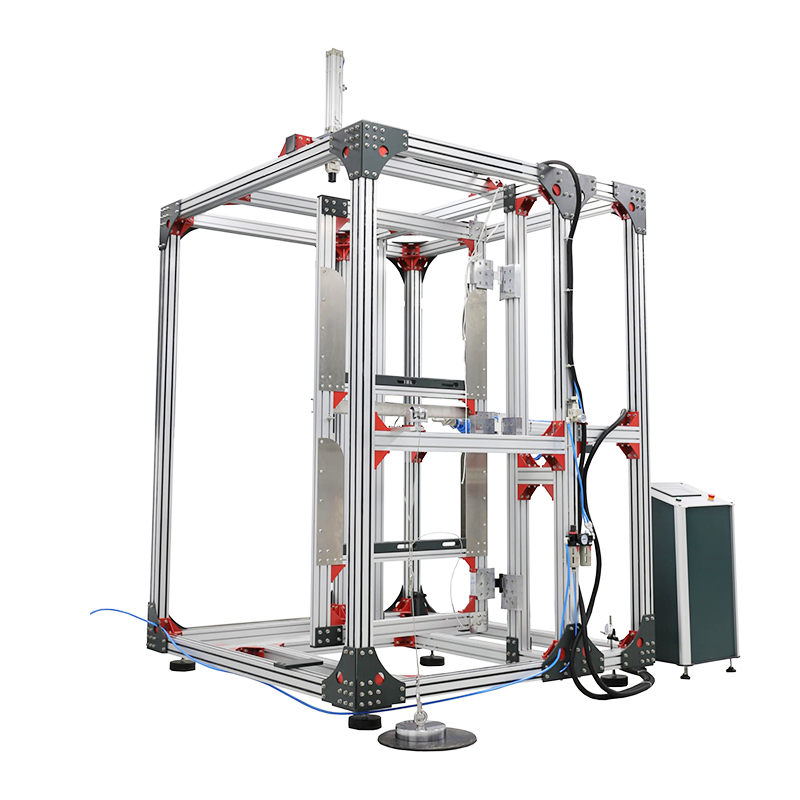
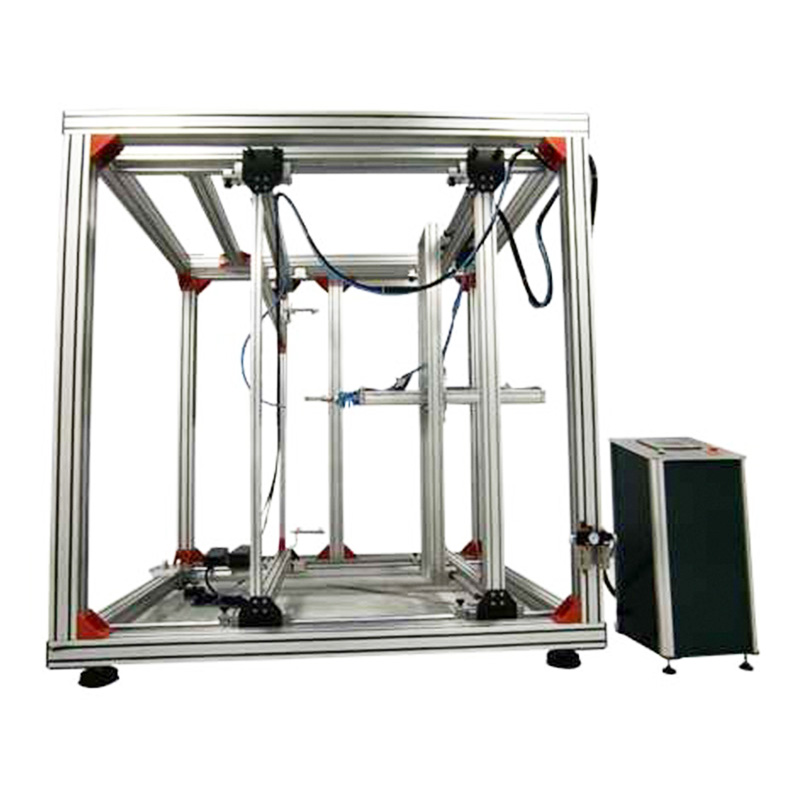
What Is an Office Chair Pull-Back & Armrest Strength Test Machine?
An Office Chair Pull-Back & Armrest Strength Test Machine is an advanced device designed to verify the stability and strength of office chairs. It applies simulated forces on the backrest and armrests to reproduce daily usage and extreme conditions. By analyzing how a chair reacts under different loads, manufacturers can confirm whether their products are reliable enough for long-term use.
Unlike simple manual tests, modern machines feature motor-driven systems, load sensors, and computer-based reporting. This makes the process more accurate, repeatable, and compliant with international safety regulations.

Why Is Chair Strength Testing Important?
The global office environment demands both comfort and safety. Without proper testing, a chair might appear fine during short-term use but fail unexpectedly over time. Such risks can lead to workplace accidents, warranty claims, and negative customer feedback.
Strength testing ensures:
User protection against sudden structural failures
Compliance with certifications such as BIFMA X5.1 and EN 1335-3
Brand reliability, positioning manufacturers as trustworthy suppliers
Cost efficiency, reducing the likelihood of recalls and replacements
Testing is therefore not an extra step—it is a vital foundation for product credibility.
How Does the Machine Perform Tests?
Armrest Strength Verification
Armrests are tested for both vertical and horizontal forces:
Vertical load: 750 N followed by 1125 N, each applied for 1 minute
Horizontal load: 445 N followed by 667 N, each applied for 1 minute
These tests confirm that armrests can handle both pressing downward and outward pulling actions.
Backrest Pull-Back Examination
The backrest undergoes controlled backward force:
This dual process demonstrates everyday usability as well as structural limits.
Data Monitoring & Output
Every test is controlled via a computer interface, allowing operators to monitor curves of force versus time. Reports are generated automatically, simplifying certification and traceability.
Conclusion: Choosing & Applying the Right Machine
To select the right Office Chair Pull-Back & Armrest Strength Test Machine, companies should:
Verify if the machine covers international test standards.
Match the load range to the chair models being produced.
Check for features like automated reporting, adjustable force arms, and precise sensors.
Ensure reliable after-sales calibration and training services.
By adopting proper testing practices, manufacturers not only safeguard users but also elevate their brand’s reputation and market position.
Last Article:Servo System Carton Compression Test Machine Explained: Your Key to Reliable Packaging
Next Article:Why Every Furniture Brand Needs a Computer Sofa Integrated Test Machine Today